The Bird Garden Blog

Here are some of the older “Birdman” columns from Saturday's Times and Transcript, they appear in the Life and Times section of Moncton’s newspaper. Also pictures from blog followers, customers and friends; along with reviews of new birding products and answers to frequently asked questions.

Sunday, June 12, 2011

Identifying Birds from Pictures


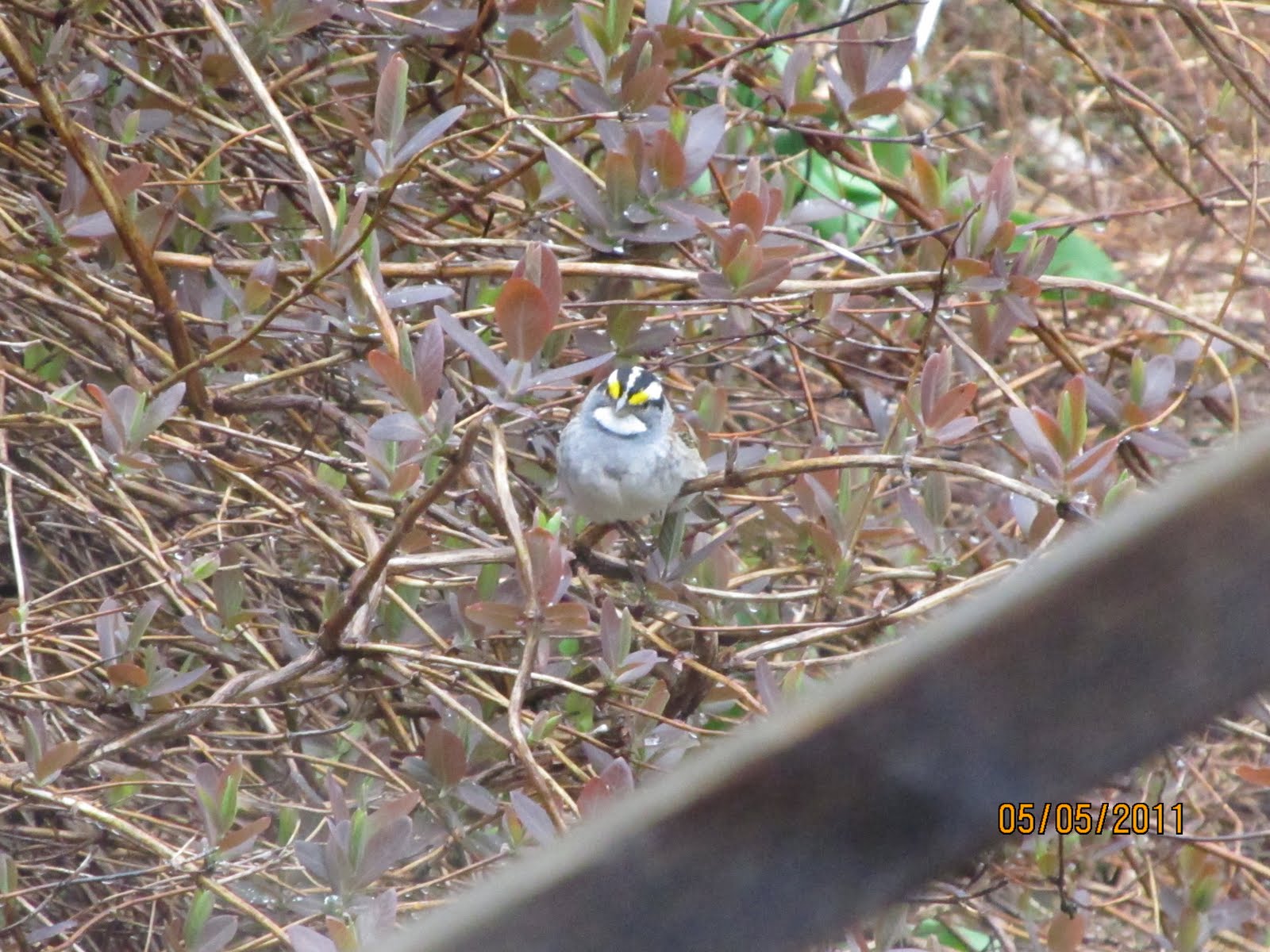
Most birders would agree that a field guide consisting of artists renderings is much more useful that a photographic guide. Except for Kenn Kaufman’s guide, which contains digitally enhanced photographs, the picture is just one representative bird. Bird photographers don’t have the luxury a fashion photographer would have, you never hear one in the field saying, “Look to the left, head down, lift your tail, that’s it, work it, work it, now pout.”

It’s hard to get all the field marks in one picture, the artists who paint the pictures for field guides are usually excellent birders, who’ve studied hundreds of birds, have years experience and can pull everything together in one painting to capture the feeling of the species. It’s hard to do this with a snapshot of one bird, that is, without the aid of photoshop.

I’m getting a new appreciation for the work that must go into creating a good field guide. I’ve been getting dozens of pictures sent to me, people dropping by the market with them on their cameras or printed off and trying to ID birds in photos on line. The truth is, not many of the pictures look exactly like they do in the guides, I suppose that’s why people are seeking help though.

Mailed and e-mailed pictures are the easiest, people don’t know for how long or how many books I referenced or to how many friends I forwarded it, to come up with the ID. The toughest are the ones that walk by the market with only the digital camera view screen to see the picture. First off, I’m already brain dead from working late the night before and getting up at 4:30 in the morning Saturday, there have been days I can’t remember my wife’s name. Then the small picture held in shaky hands, (good coffee at the Market), all of a sudden 10 people who were ignoring me are now listening to what I’m going to say.

Lately I’ve been using a variation on a tip a professor taught us in Vet Tech school, he would give us tips on how to stall when you are absolutely clueless, without looking so. The first thing he’s say is to listen with a stethoscope, you can’t hear the owner with your ears plugged so they won’t be expecting any wisdom right away. Then he’d say, if you still need more time to think, take a rectal temperature, if the owner tries to ask questions, slightly raise a finger in a “wait one second” gesture and nod towards the far end of the patient with our nose sightly wrinkled. You usually get an “Oh, I’m sorry.” We’d only get caught if the owner was to ever catch us taking temperatures in the back, we’re very few conversations were off limits during the deed.

So I came up with some stalling techniques for identifying pictures of birds, first, it’s expected that you take a minute to familiarize yourself with the camera, especially zooming in. Then you get maybe 30 seconds before you hear, “Oh, sorry, I thought you’d know.” So use it wisely.

Just before I get waved in from the mound, I’ll ask, “Do you have any other pictures of this bird?” And since it’s a digital camera, and since the pictures are free, the answer is usually, “Yes, I have all kinds.” So you pass the camera back, and this is why you really familiarized yourself with that particular model, you shut it off right before they take it. Now you have time while the camera reboots itself, and the photographer finds the right spot. Maybe even enough time to get a field guide out, you look quick and when they pass you the camera you pass them the guide and ask, “Do you think this may be it?” or if you’re still not sure, “I think it’s one of these, let’s have a look at the other pictures.”

This trick works great, but like the professor who taught us the variation said, “It doesn’t work if the dog has an arrow stuck in his butt. You don’t need to take a rectal temperature to tell the owner the dog has been shot with an arrow. In fact, it’s best not to mention it at all, it’s likely they already noticed.”

So if it’s a close up of a robin, chickadee or other bird you should know, just say, “Wow, that’s a great picture of a ….!” Even if it’s a starling.

I’ve been finding out though that having a dozen pictures of a bird that’s tricky to identify is very helpful, although they won’t always move around the way a fashion photographer would expect, they do move around. If a photographic guide could include a dozen pictures of each bird and still be able to be carried in the field it would be much more useful.

The same sometimes happens with pictures taken of the same species on the same day in the same tree, they may not look exactly alike. Usually it’s because they are in different stages of molt or there’s a variation in plumage. I like to refer to the introduction in Kaufman’s guide where he shows 10 pictures of what at first appears to be 10 different species, they’re all House Finch showing varying degrees of streaking and colour, (from brown to orange to fairly bright red).

This week I was helping identify a Spotted Sandpiper on line, it wasn’t in breeding plumage so wasn’t even depicted in some guides that only show one picture of each species. I thought I remembered that the white from the breast that pointed upwards between the wing and neck was a field mark distinctive to the Spotted Sandpiper. Here’s where there really isn’t a substitution for field experience… years ago in Hillsborough, they let the water out of the big pond on Golf Club Road during shorebird migration. The newly exposed mud was a bird magnet, especially on high tide in the Bay. I remember seeing three different plumages of this sandpiper in one field of view, I wasn’t alone or would never have figured it out. There was one still in breeding plumage with the namesake spots on the breast, one with a light chocolate back and clear breast (adult nonbreeding), and one very similar but with slight barring through the chocolate (juvenile). They all showed the same white wedge up onto the shoulder. I can remember this from 15 years ago, and can’t recall why I went to the basement, no book can teach you what watching the bird will.

I was doubting myself though, because Sibley didn’t point to it as a field mark, so I retrieved my well worn Peterson and there was the arrow pointing out the field mark, (just checked Kaufmann and he points it out too). So one book, even if it’s Sibley (my bird bible) can’t be all things all the time.

Another ID question came on line, a dreaded thrush picture, these guys are easy to identify by sound, quite a bit harder from a picture. There was some discussion, and when it was said they might never know for sure based on this one photo, I chimed in with my stock question, “Got any more pictures of this bird?” Turns out there were 13 pictures, one of them showed the tail lifted high enough to see the top side, clinching the ID as a Hermit Thrush. So what started as a stalling tactic has become a good tool, not many people take only one photo of anything any more, now that it doesn’t cost a dollar a click.

Tuesday, May 17, 2011

Things were sure hopping around the province this week with rare birds, the highlight of the week though would have been Saturday when a the Pink-footed Goose spotted near the Cormierville wharf in Kent County, the word went out quickly and the group in the Nature Moncton field trip were able to divert course and see the bird before dark. It stayed in the area at least until Wednesday when I had to submit the column, so check around it may still be in the area.

This will be a first Pink-footed Goose for New Brunswick, they breed in Greenland, Iceland and Svalbard, one shows up occasionally in North America but until now not in New Brunswick.

Some time last summer I noticed a photo on the Weather Network that was submitted by a subscriber, when I went back a few weeks later it was nowhere to be found. This week I finally tracked down it’s origin. The picture was of two fledgling Peregrine Falcons eating a Ruffed Grouse, even better there is accompanying video that Kevin Snair of Creative Imagery recently uploaded to Birding New Brunswick, (find it under “VIDEO” tab). Warning though, this may not be for everybody, the gruesome twosome have very poor table manners; they look like two teenagers with the munchies and a bucket of the colonel’s finest.

One of the birds I mentioned I was especially looking forward to was the Gray Jay, so far they haven’t made an appearance in our yard and I hadn’t heard of any reported. There was a small group of birders milling around the market talking about all the excitement of the week when a someone who was listening said, “I just want to buy some suet for my Gray Jays.” I was a quite excited to hear they were beginning to appear at feeders. It’s not that they’re rare, but usually someone calls to verify what they are seeing and the comment frequently is that it’s like the pictures in the field guide but it reminds them more of a big chickadee than a jay. It’s always interesting to see a bird this size easily navigate the small-bird-only or up-side-down suet feeders, I know Blue Jays can sometimes, but the result wouldn’t be described as “graceful”, Gray Jays can hang on with the ease of a chickadee or nuthatch.

They are in the same family as crows and jays, but belong to a different group within the Corvidae. Gray Jays are our only Old World jay, which helps explain the difference between them and their cousins. Extremely tame and polite, (except for the lunch stealing) they are welcome visitors in any yard. Once you’ve gotten to know them, you’ll recognize their unique way of gliding from tree to tree until they pull up and land beside you or at your feet, you’ll even recognize the shadow they cast as it passes by, sending you running to the seed bin or freezer for their favourite foods.

In our yard they’d show up in three’s, we’d get a group from the west and a different group from the east, if there wasn’t food supplied on each side of our yard, fights would ensue. They travel in three’s because the dominant juvenile will chase it’s nest mates off and only he (two-thirds of the time it’s male) will accompany the parents throughout the rest of the fall and winter, benefiting from their teaching and protection.

I can’t think of any bird with more colloquial names than the Gray Jay, still known by their former name, Canada Jay, they’re also called moose-bird, camp-robber, camp-bird, meat-bird, gorby, (I think is a New Brunswick thing, when I first heard it after moving here, I just nodded along and kept quiet, not wanting to admit I had absolutely no idea what people were talking about), whiskey-jack (I just learned, from Wiskedjak, Wisekejack or other variations of aboriginal languages, meaning a mischievous transforming spirit who liked to play tricks on people. Making it the only Canadian bird who has a common name with an aboriginal derivation.)

All the other crows and jays show little plumage difference across sex and age, the juvenile Gray Jay however is much darker overall and has a dark gray head and throat, certainly sending birders with less than adequate field guides into a tizzy.

The other corvids have different beak structure with a special flange in the lower jaw to brace it against the scull, when you see a Blue Jay holding a peanut between it’s feet, it’s only pecking only with it’s lower bill.

Gray Jays will eat just about anything a Blue Jay will, I find they don’t have a strong desire for sunflower but will take some if hulled, for some reason they go wild for bread, I save them a couple crusts in the morning, when I go out on the deck and whistle for them, they show up in seconds. I prefer though to feed them something a little more hardy, peanuts, peanut butter suet, plain rendered suet and raw suet seem like favourites and will provide extra calories for winter survival. Left on their own they have a wide variation in diet, insects, spiders berries, seeds, fungi, rodents, eggs, and carrion.

Like other jays the Gray Jay will store food for winter, but they have specialized salivary glands and can coat the food in a mucus making a bolus that it will stick in nooks and crannies throughout it’s winter territory. This mechanism for surviving winter also makes them vulnerable to climate change, they store food in the fridge, if the fridge isn’t cold enough the food will spoil. This is one of the reasons I’m anxiously awaiting Gray Jays in my yard, we didn’t have any last year and this year I’m hearing very little from others. Maybe it’s just me, drop an email if your getting some visits.

Monday, May 16, 2011

Fall Birding in New Brunswick


Last week I mentioned it may be a good time to be out birding, as both rare birds and the normal seasonal visitors might be appearing. Well, for once I was right, every time I check emails there is another report of a new bird. With all this increased activity there are sure to be more birders on the prowl which will turn up more interesting birds and draw more birders and so on.

I’d like to think that last weeks column inspired folks to go birding and my readers discovered all these rarities, but neither of you made any of the reports.

Things kicked off last week with an influx of Redheads (better clarify, they’re ducks), the first reports were in the north of the province, then Saint John area, then Salisbury and a local birder thought he should scope out the Moncton area because of all the sightings and was successful.

The week was also marked with reports of Eastern Towhee, starting in Rothsay, then Blacks Harbour (at the feeder yard of a former Lower Coverdale resident, now keeping in touch on BirdingNewBrunswick, where there are great photos posted) and another in Albert County. A Northern Cardinal showed up at a feeder in Sainte-Marie-de-Kent.

There were several Cattle Egret, first in Hebron, Albert County, then three showed up at the Jones Farm in Upper Coverdale and another on Lameque Island. There were several Field Sparrow reports, as well as Bufflehead,

I also mentioned some species should be moving into our region for winter or still passing through on migration, Bohemian Waxwings , Lapland Longspur, Horned Lark, American Pipit, Dark-eyed Junco and Snow Bunting were all noted.

With lots of birds still passing through, like large numbers of American Robins, Double-crested Cormorants, Common Eider, some warblers and plenty of shore bird species, you hardly know where to look first.

Sound like a lot of birds? Well, I’m sure I missed, lost and forgot a few reports, and I didn’t even mention the birds that are here in normal numbers. With all the eyes out looking, I’ll bet next week brings even more interesting reports.

One constant for spotting birds is the local sewage treatment lagoon, many of the sightings mentioned were discovered in various lagoons, and when my friend went on his mission to spot a Redhead, that’s where he went. At least three different lagoons were mentioned in his travels (White Birch Estates being the winner). Talk to any birder and they’ll tell you they are a consistent draw for not only ducks but many other species as well. Think of me the next time your eating wild duck, I remember my father would alway try to describe the taste of each duck, it might be “fishy” or “muddy” or “wild”, we were young and never thought to ask why. But no matter where you shot the duck, remember they have wings and it’s highly likely he’s “been there, ate that”. Especially during hunting season; since they’ve stopped allowing hunting in our local lagoon it acts as a miniature sanctuary. Yeah, before my time here, people used to hunt in the lagoon, I bet the retriever didn’t sleep on the bed those nights.

One of the categories on BirdingNewBrunswick under HotSpots is: Sewage Lagoons of New Brunswick: A Birders Guide... because they’re not usually mentioned in the travel brochures. Used to be if you didn’t know any birders in the area you’d have to stop at local businesses and ask for directions, I’d recommend carrying a clipboard and wearing an official looking uniform cap. That way they’ll think you’re an inspector instead of a nut bar who’s going their on purpose... to look at birds.

Soon, when you’re traveling and have a spare hour, you’ll be able to login with your iBerry clone phone and find directions to the local hottest spot. (Then login to the weather network and find out which way the winds blowing.) Often you can scope these gems from higher ground as they are usually in the lowest lying areas of the town, remember the plumbers number one rule of thumb… poop flows downhill.

I’m always wondering what the draw is, for ducks it’s obvious, they’re in for the corn. I suppose grebes, cormorants and herons are there for the gold fish. Swallows, warblers and flycatchers must be there for the insects that are attracted to the warm water. Then the birds of prey are there for all of the above. None of this has any basis in science what so ever, it’s just the product of spending too much time alone with my thoughts.

Sunday, April 3, 2011

Q&A Birding in the Area


Q. I’m new to birding and to the area, what could I expect to see around here and at my feeders throughout fall and winter?


A. This is a prime time to be seeing increased numbers of the regular birds and even spot a rarity or two. Birds are on the move for a few reasons, some are migrating south, but this time of year there is also a “reverse” migration: that is some birds that don’t usually come into our range will head north and hang around a while before leaving for their wintering grounds.

Another phenomenon is post breeding dispersal which is natures way of preventing inbreeding, some of these species may overshoot their normal range and show up in your back yard.


And still others will be showing up in greater numbers now that the stress of nesting and defending territory has passed, and don’t forget all those first year birds. We are seeing chickadees in greater numbers, they’ve let down their guard and are traveling in loose flocks in search of food.

Chickadees are known for their food finding abilities and it’s not just ornithologists who’ve noticed this, other birds have caught on too. Migrating and local birds will seek out and follow chickadee flocks and cash in on their skills.

So if you’re out birding or in the backyard and hear chickadees, take a moment to check out every bird, Boreal Chickadee, nuthatches, woodpeckers, creepers, warblers, kinglets and vireos hang out in these chickadee flocks.

Some birders will “pish” or even play a tape of chickadees mobbing a Saw-whet Owl

to attract chickadees then sit back and watch for what else might come to investigate what they’re scolding.

There are some finch on the move, I’ve already been hearing and seeing Evening Grosbeaks (they’re part of the finch family) around Albert County, Purple Finch are showing up along with some American Goldfinch and Pine Siskins. The Winter Finch Forecast for 2010-2011 predicts a Common Redpoll invasion, I’m sure they put a lot of science to work to come up with this, but redpolls usually follow the every-other-year visiting schedule, so that’s no surprise. Redpolls eat the seeds from white birch which had a poor crop in the north this year, that means they’ll likely be coming south to enjoy our wild seeds and to take advantage of our nyjer and black oil sunflower feeders.

The Downy and Hairy Woodpecker are two common visitors but we may have five or more other species around and possibly even coming to suet. The Pileated Woodpecker is common; depending on where you live, once you learn it’s call and drum you might be noticing it every day. The American Three-toed Woodpecker and Black-backed Woodpecker are around in winter but unlikely to show up at feeder yards. The odd Northern Flicker stays for the winter, and every now and then we have a mini invasion of the Red-bellied Woodpecker and even more rare and more mini (or is it minier?) invasion of the Red-headed Woodpecker. When these last two occur they do come to feeders, enjoying a bit of everything…. sunflower, peanuts and suet.

Right now we have a very friendly White-breasted Nuthatch and a secretive but predictable Brown Creeper. I smear peanut butter on the side of his favourite tree and he likes raw suet, so when I hear him I know where to look.

I’m anxiously waiting for one of my most anticipated visitors of the fall, the Gray Jays should be showing up soon to begin storing food for the winter. They follow me around the yard because they know I have a bag of peanuts or small cubes of peanut butter suet in my pocket. I haven’t tried to hand feed them, but I’m sure I could. They often land on things I’m holding, like branches or lengths of steel I’m painting.

A few of the summer sparrows may hang around in winter and maybe even a rarity will show up, but the most common winter sparrow is the American Tree Sparrow, they’ll be feeding along side Dark-eyed Junco and if you’re lucky Snow Buntings.

I’m sure I missed lots of birds, drop me a line to tell me what you are seeing or what you’ve seen in previous late fall, early winter seasons.


Q. I walk along the river with my small dog and I have cats, should I be worried about the eagles?


A. I too have a small dog and I never give it a second thought. I watch eagles cruise up and down the shore line and in 18 years have never had an eagle even take a second look at my dog(s). I have heard stories, questions and concerns but haven’t found any evidence of hawks, owls or eagles taking small pets. It’s usually cats that I hear about, I was at a presentation by a New Brunswicker who studies and bands birds of prey. He said he often saw left over skeletons in nests and kept track of what each species was hunting. When I asked if he’d ever seen a cat in any of the nests, he seemed surprised by the question but said he never did.

I hear the concern often, and it’s increasing. If a cat disappears it’s very unlikely an eagle, it’s much more likely that it was hit by car or coyotes caught it (especially if it disappeared over night).

I know I’ll hear from people who saw an eagle with a dead cat, or who know someone, who was talking to someone, whose cousin’s half sister saw a cat collar hanging out of an eagles nest. If that happened, I’d love to see a picture, but I’d be more inclined to believe it was picked up as road kill, that’s what eagles do.

New Website for Bird Enthusiasts

Last week was the launch of a new birding site called Birding New Brunswick, at BirdingNewBrunswick.ning.com. It’s a social network for bird enthusiasts. You can post pictures, video, ask the group questions, promote your favourite birding area, blog, post nature related events, chat and report sightings. You are automatically given your own page, with photo album, blog postings and more.

If your Facebook friends are saying, "enough with the birds already", sign up, nobody in this group will complain. I think a site like this is needed to get (and keep) young people involved. When I mentioned this to one geezer he said, “Social networking? Nobody will ever do that.” I said, “Come on Dad, get with the times.” (He doesn’t read my column either.) Sixty years from now, I want the guy changing my diaper to be interested enough in birds to fill the window feeder for me.

Oh yes, it's free, no gimmick that I can tell and there are no advertisements, so I’m not constantly reminded of my “shortcomings”.

I’m a member of a very similar site from the States called WeLoveBirds, this was a spin off of from one of the subscriptions I bought when I was researching hummingbird nectar. It was started by the Natural Resources Defense Council and the Cornell Lab of Ornithology, it was fun to go on and check out the question and answer section, many consist of a photo and the question, “What bird is this?” It’s a good challenge to see how many you can answer, but the problem is the site is for all of the States and a lot of the questions were coming from the west, birds that I’ve never seen and know nothing about. So when I saw a similar site for New Brunswick I was quite excited, then the first question came across and it was a picture of ducks taken in North Carolina. Oh well, I’m sure that will change soon.

There’s already one special interest group, the NB ODONATA GROUP, for members with a special interest in dragonflies and damselflies. If you have any questions or pictures it’s a great opportunity to ask Denis Doucet, one of the provinces leading authorities on the subject has volunteered to edit the blog and field questions.

BirdingNewBrunswick should turn up some interesting sightings, I know since I started this column there have been a few firsts that were sent to me that may have gone unreported otherwise. For example the first Laughing Gull at Cape Enrage or the first nesting Peregrine Falcons on the Assumption Building in Moncton. (Both are pictured and discussed already on BirdingNewBrunswick.) That’s the thing, you never know what will be turned up next, in the age where everyone has a camera on them all the time. You may have a picture of a Starling or it may be a first for the province.

So instead of surfing around the US site I’ll be spending my time checking out the beautiful pictures that were taken in my own province, at least I recognize most of the bird pictures. Dragons and damsels interest me, especially the pictures, but I can identify only about 4 of our species so far.

That’s the thing about birds, they seem to be the universal draw, I started hanging out with other bird people who also had and interest in dragonflies, butterfllies, wild flowers, mushrooms and more. We all came for the birds (at least I did), but others would be pointing out other interesting aspects of nature, eventually it starts to rub off. If I live to be very old, I may become a well rounded naturalist.

I picked up a little about mushrooms, there are still only 3 species that I will pick and eat. But, this is shaggy mane season and one of my all time favourite meals is “Cream of Shaggy” soup. I can’t stress enough the importance of knowing what you’re doing. You can’t go to a half hour presentation, pick a mushroom and say, “Yeah, that looks like the one.” You’ve heard the expression, “A little knowledge is a dangerous thing”, well that was coined by a liver transplant surgeon after a guy ate the wrong mushroom.

OK, you caught me, the saying was around before they were doing liver transplants, but you get the point.

Once you’ve done all the tests and your sure you have shaggy manes, pick them before they open, after they open the spores will blacken you soup, I still eat it but it doesn’t look as good. Dice and cook the mushrooms with garlic and onions, add them to diced cooked potatoes, I leave the potato water for thickener, it drives my mother nuts but it works. Then add cream, the good stuff, at least 18% fat. You can add corn if you like, once I dumped in a bottle of bar clams. It’s quick and delicious.

I love feeding this to the in-laws, while I’m cooking it I make comments like, “This one doesn’t look like the rest.” or “No dear, I don’t think that’s the destroying angle.” When you call them to the table, don’t touch your spoon, leave your hand folded on your lap, give them your best evil smile and tell them to go ahead and try it. I guarantee, nobody’s touching that soup until you take a bite.

Wednesday, February 23, 2011

A Little on Photography

First, I’d like to say that you could write books on what I don’t know about photography. But, if you’re trying to get decent frame filling pictures of birds and don’t have the budget for (or strength to carry) one of those great big honking lenses that look like they’re made for astronomy, you could consider a blind.

A blind can be made of almost anything, it’s a good idea to make it at least big enough to sit up on a small camp stool and have various openings for camera lenses and viewing. It can be portable or fixed, blinds made for hunting can be bought rather inexpensively but you do get what you pay for. Ice fishing tents are favored by some professional photographers because they have a little more room and are usually better built. You’d be surprised how warm and comfortable a fridge box is and you can easily cut flaps for your camera. You want to leave the floor in place so your weight will keep it from blowing away, but if you cut leg holes and make two handles, you can poke your legs out pick up the box and move to a better location without getting out of the “blind”. If you neighbours ask what to heck that was all about, blame it on the kids, after all one man’s fort is another man’s blind.

My all time favorite blind is called the Forester, it’s very portable, comfortably seats 4 birders, with individual roll down camera hatches and has room for all their gear. It can be made bug proof with some duct tape (you can even get camo now) and mosquito netting. Depending on the age and model it may have working heaters and air conditioner.

You can pick one up at the local Subaru dealer, classified adds or junk yard, depending on your budget.

Seriously though, what could be better than your vehicle? Did you ever pull up to a marsh and see a Great Blue Heron a few yards away? They tend to stay put, that is until you open up the trunk to get your portable blind out. I like the Forester for the all-wheel-drive feature, if your going to be driving around your yard from feeder to feeder you don’t want to get stuck, that makes a mess...you’ll have to get towed out, if you’re married you’ll have to fill in the ruts and match up sod before 5 o’clock. If your single, you might just make the switch from a portable to a stationary blind, the conversion kit’s cheap enough, 4 to 8 cement blocks.

If your lens is too powerful to hand hold or you just want to leave it trained on a feeder until something happens, you can pick up a car window mount for a tripod head, these are also used for spotting scopes. You just roll the window down part way and a special C-type clamp screws securely to the glass. There are cheap ones, but if you already have a tripod that you like, I suggest buying just the clamp and using the head from your tripod, it’s likely to be better than the head that’s attached to the low end car window mount. Down the road, the best set up would be a tripod with a quick release plates that attach to your scope and/or camera and a head on the car window mount that accepts the same quick release plate. This way you can go from one to the other with a flick of a switch.

My goal is a stationary blind/gazebo, I even started on quite a while ago and one of these days I’ll get it finished. The key for you married folks is to not mention the blind aspect of the structure, just say you’re building a little getaway to have a cup of coffee or glass of wine, out of the sun and mosquitoes, I even plan on putting in one of those chess board tables. Mine’s small for a gazebo but luxurious for a blind, I have a solid wall facing north, I tell my wife that’s to break the coldest wind, but I’ll cut camera hatches in it so I won’t be shooting into the sun. The south side will be open and screened in, the east and west walls will have camera hatches, just in case.

Then I’ll set up a few feeders within good shooting range, place some interesting perching sites out of gnarly old wood and drill some holes in the side of dead trees for suet to draw birds in close and still have a natural looking setting.

Where I keep slipping up is when I say I want to plant a shrub here or put up a trellis there for the “approach”, if I see a good bird at the feeder, I want to be able to get in the blind without scaring it away. She keeps wondering why I want to sneak up on our little romantic getaway.

Please remember to always put the bird ahead of the picture, if you’re shooting at a feeder, it’s no big deal if the birds get a little shy for a while. If you want to get pictures of nestlings, it’s crucial that the birds aren’t disturbed. If the parents are away from the nestlings for even a short time could mean the difference between success and failure of the nest. Also, be considerate of birds during other periods of high stress, for example during extreme cold weather in winter, owls may be out hunting in daylight. It’s very tempting to try to get a picture of these magnificent birds, but if you’re chasing the bird around to get a picture, he is unable to hunt, a few unsuccessful attempts at prey could make the difference between getting through the winter or not.

Just exercise a little common sense, if the birds are being unduly disturbed, back off, and if you get some good shots, send them along and share them on our on-line photo album.

Quiz Answers

Thanks to all who sent in their answers, it was fun for me too. I’ll tally up scores, draw winners in each of the three categories and announce winners in the next column.


Here are the answers to the quiz.


True or False:


1. If you want to attract small birds you should feed small seed.

FALSE, chickadees eat peanuts, pigeons eat millet.


2. It takes 36 hours in your birdbath for mosquito eggs can hatch into adults.

FALSE, it takes around 10 days to go from egg to larvae to pupae to adult. A well maintained bird bath would not be a breeding ground for mosquitoes.


3. Great-crested Flycatchers, Blue Jays, and Hairy Woodpeckers all use the same size bird house.

FALSE, Blue Jays don’t use bird houses. I didn’t think this was that tricky of a question, but only about ⅔ got it right.


4. 7x50 binoculars are 15 times more powerful than 7x35.

FALSE, they are exactly the same power but the 7x50 have objective lenses 15 millimeters larger than the 7x35. They will let in more light but objects will appear 7 times closer in each pair.


5. Chickadee, nuthatch, jays, woodpeckers and blackbirds are attracted to peanuts. TRUE, both of our chickadees, both of our nuthatch, both of our jays and most if not all of our blackbirds would list peanuts in their top 3 favourite foods.


6. A Bald Eagle is bigger than a Golden Eagle.

TRUE, if you saw a brown eagle that was larger than the nearby Bald Eagles, it is almost certainly an immature Bald Eagle because Golden Eagles are actually smaller. Some hard core birders pointed out that the Golden, although smaller is heavier, but since most of us aren’t ever going to be weighing eagles, the judges ruled the answer is “TRUE”.


7. It’s impossible to keep squirrels off your feeders.

FALSE, and it’s easy, tall pole at least 10 feet away from any launching pad with a baffle part way up the pole.


8. A nesting colony of Chimney Swifts may have 20 nests or more per chimney.

FALSE, this is one that I haven’t written about, I was searching for ideas when I read on Cornell Lab of Ornithology’s web site that only one swift will nest per chimney, they will allow other swifts to roost. This confuses people watching from the ground. I thought, “I did not know that.” So I put it in the quiz.

If you knew this without enlisting the help of Professor Google, reach around and give yourself a pat on the back, not many got it right.


9. To save money, mix white millet in with the nyjer seed, finch love it and it won’t attract pigeons.

FALSE, even though it’s a part of most of the finch mixes you buy, finch don’t eat millet, it’s a cheap filler that ends up on the ground where pigeons are waiting with open beaks.


10. Hummingbird nectar has to be dyed red.

FALSE, I think everyone got this right.


11. When it’s time for hummingbirds to migrate south, they pick a day when conditions are right and fly nonstop to South America.

FALSE, hummingbirds take there time migrating, feeding as they go. People in the southern states only put feeders out in spring and fall. Plus, almost all of our hummingbirds overwinter in Mexico or Central America.


12. Plastic owls will scare pigeons away from feeders but the more desirable birds are unaffected.

FALSE, fake owls might work for about 5 minutes, then the pigeons are right back at the feeders. What I could never figure out is why people think they would scare pigeons away but not the all the other birds.


13. Mesh feeders work well for black oil sunflower and peanuts but aren’t a great choice for nyjer.

I had to let either answer go on this one, it is just my opinion, I wasn’t thinking of the half of one percent of people who like mesh nyjer feeders. The other 99.5% of you returned them for a better model. I would have answered TRUE, having seen all the seed that spoils in the nyjer mesh feeders.


14. New Brunswick eagles migrate south before our rivers freeze over.

FALSE, we have eagles year round, they frequent such fine dining locations as the Westmoreland Albert Solid Waste Commission, Cardwell Compost facility, as well as roadsides and farms serving up the best in carrion.


15. Pigeons aren’t able to eat nyjer from the proper feeder if you don’t use a tray. (so at least you can feed finch)

TRUE, it has to be the proper feeder though, some people are still feeding nyjer from feeders meant for sunflower. The openings should be just slightly larger than the fat end of a toothpick.


Multiple Choice:


1. Woodpeckers drum on your stove pipe at dawn because

a. they want you to fill the suet feeder.

b. they think you should be awake too.

c. they’re trying to attract a girlfriend.

“C” is the best answer, although some mornings I can’t help thinking it’s a little “ALL THE ABOVE”.


2. The best thing you can do to attract waxwings is

a. feed nyjer seed.

b. feed sunflower seed.

c. feed suet.

d. plant native fruit trees.

“D”, you could also feed fruit, but they don’t eat seed or suet.


3. Platform feeders attract

a. doves and jays.

b. goldfinch and chickadees.

c. cardinals and grosbeaks.

d. all the above.

“D”, all birds love a platform feeder, if it wasn’t for pigeons, rain and snow they would be the only feeder you’d need.


4. In New Brunswick, American Goldfinch

a. hibernate.

b. migrate.

c. stay all winter in a duller winter plumage.

d. both b and c.

“D”, some migrate, some stay, numbers vary from winter to winter but we usually have some Goldfinch in winter.


5. All the experts say hummingbird nectar should be

a. 1 part sugar: 2 parts water.

b. 1 part sugar: 1 part water.

c. 1 part sugar: 4 parts water.

“C” is the best answer, never stronger than 1:3 and with that only the first of the season.


6. Tree Swallows require houses

a. with at least 4 compartments.

b. placed 2 per pole.

c. placed about 100 feet apart.

“C”, Tree Swallows have a 100 foot territory, other nest boxes placed within the circle could be used by chickadee or bluebirds though.

7. A good way to attract more birds to your yard is to

a. use mixed seed.

b. use a variety of feeders with the proper seed in each feeder.

c. add a feature with moving water, like a fountain or dripper.

d. both b and c.

“D”, spreading out the feeders will allow more birds to eat in peace, Blue Jays want the peanuts so give them a feeder away from the small bird’s feeder. And, almost nothing with feathers can resist moving water.


8. A Blue Jays all time favourite food is

a. sunflower seeds. (they’ll do anything to get them)

b. millet. (they’ll do anything to get it)

c. corn. (they’ll do anything to get it)

d. peanuts in the shell. (they’ll do anything to get them)

“D”, if you answered “a” you haven’t tried peanuts in the shell yet. It’s the only feed they will actually come indoors for. Try a small bag, you don’t need anything special to feed them, just place them around where you can observe. You will want a feeder eventually to slow them down, peanuts are expensive and jays will work non-stop until they are all hidden away.


9. In the spring, birds repeatedly fly against your windows because

a. they want in your house.

b. they see their reflection and think it’s a competing bird.

c. Oprah’s on.

“B”, I think everyone got this right, it would be “c” if they were already in your house.


10. Suet can be fed year round if

a. the temperature stays below 10 degrees Celsius.

b. you don’t have any starlings at your feeders.

c. it’s double rendered.

d. both a and c.

“D”, would be the best answer but, where in the world does the temperature not get higher than 10 degrees? Are there birds there (besides penguins)? So “c” is a good answer too. I can’t really let “a” slide and definitely not “b”.


11. Suet could attract

a. woodpeckers

b. chickadee and jays.

c. warblers and orioles.

d. a and b.

e. all the above.

“E”, warblers and orioles have been known to partake, especially on cold spring mornings.


12. Unless you are going to feed continuously throughout the winter you should

a. take your feeders in so the birds will migrate.

b. hire a service to come by daily to fill your feeders.

c. feed when you can, in nature, when a source (i.e. flower or weed seeds) runs out, birds move around and find another.

“C”, is correct, “b” would be OK too but not necessary. Removing your feeders won’t force any bird to migrate, unless you consider jumping the fence to your neighbours yard migrating.


13. If you want to get started birding you should have

a. expensive binoculars, a spotting scope with tripod, digital camera, several field guides and bird songs recordings.

b. a reasonable pair of binoculars and a good field guide.

c. a spouse who is into birding or doesn’t care if you’re never home.

d. both b and c.

“D” is the best answer but so many of you single (and oblivious married) people answered “b”, I’ll let either go.


14. A good field guide should

a. fit in your pocket.

b. list similar species together.

c. have arrows to quickly point out the differences between species.

d. all the above.

“D” everyone got this right. I guess it was too easy.


15. To attract more hummingbirds you should

a. place several feeders that are not in sight of each other.

b. buy really big feeders with enough ports so everyone can feed together.

c. choose a variety of plants so you will have blooms throughout the season.

d. both a and c.

e. both b and c.

“D”, Ruby-throated Hummingbirds fight non stop, it doesn’t matter if there are enough feeder ports to go around, one guy will want them all for himself. It’s best to have several feeders spread around and you can never go wrong with flowers.